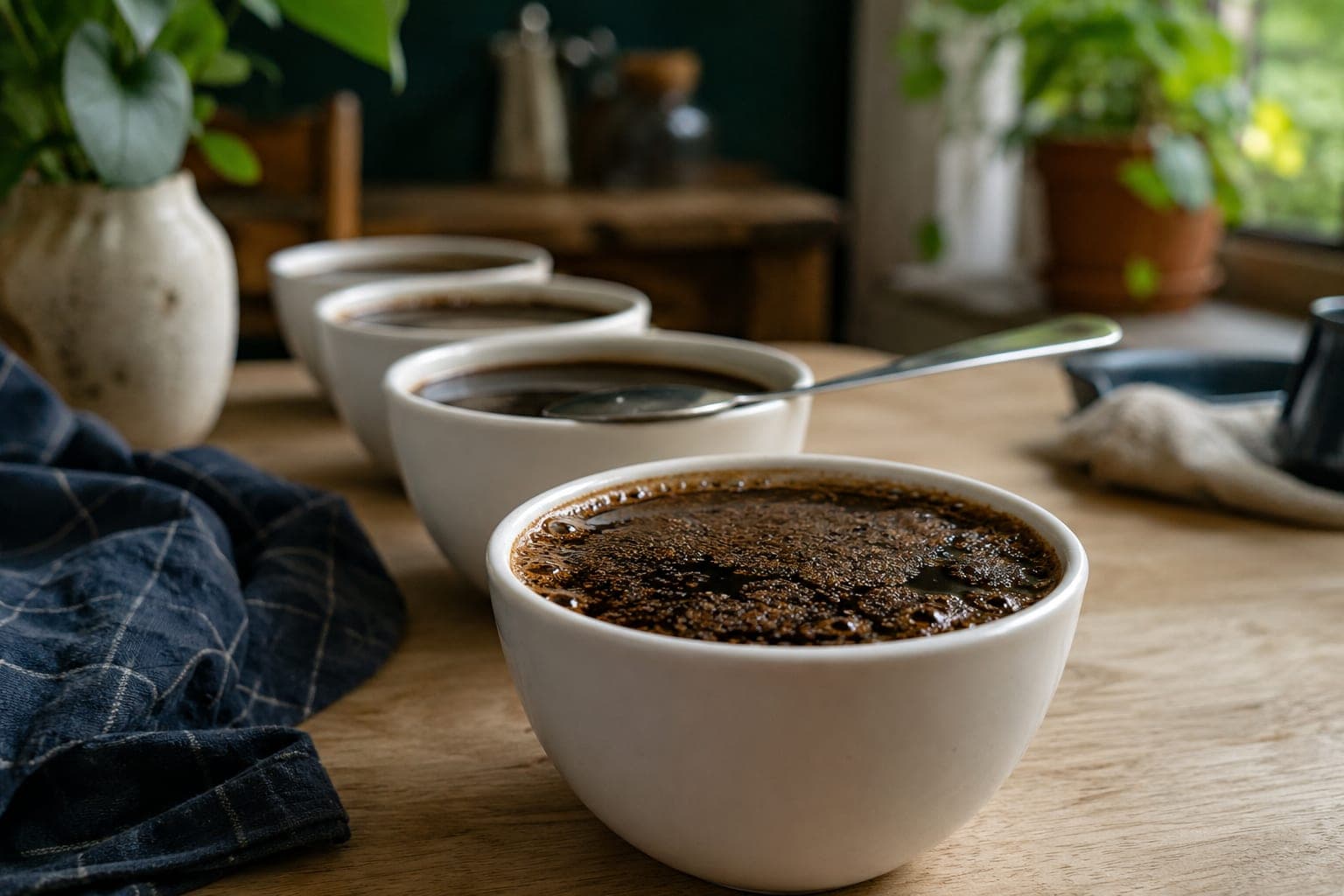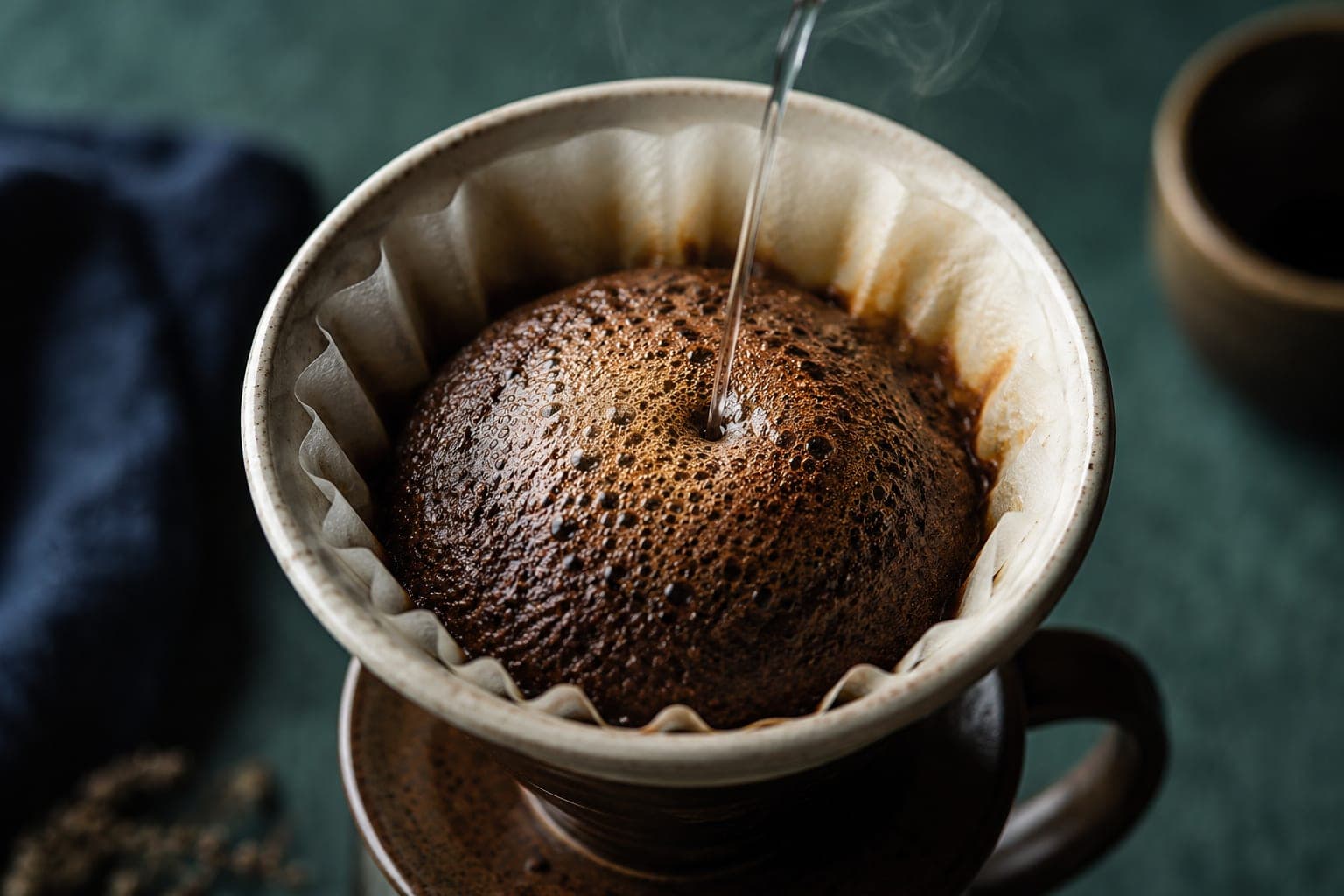
If you've watched anyone brew pour over, you've seen it: they wet the grounds with a little water, then wait — half a minute of doing nothing while the coffee bed swells and bubbles. That's the bloom, and skipping it is one of the most common reasons a home cup tastes flat.
What's actually happening
Fresh-roasted coffee is full of carbon dioxide, trapped from roasting. The moment hot water hits the grounds, that gas rushes out — which is the foaming, puffing you see. (The fresher the coffee, the more dramatic the bloom. It's a great freshness check.)
Here's the problem the bloom solves: CO₂ repels water. If you just pour straight through, the escaping gas pushes water away from the grounds and channels it around them, so a lot of your coffee never gets properly extracted. The cup comes out thin and uneven.
The bloom isn't a ritual. It's degassing your coffee so the water can actually reach it.
How to do it
It's simple:
- Start your timer and pour just enough water to saturate all the grounds — about twice the weight of the coffee (so ~60 g of water for 30 g of coffee).
- Give it a gentle swirl or stir so every ground is wet.
- Wait 30 to 45 seconds. Watch it puff up and settle back down.
- Then begin your main pour as usual.
The payoff
Once the gas is out of the way, your main pour extracts evenly — and the difference is immediate: more sweetness, more body, more of the flavors on the bag. Thirty seconds of patience is, cup for cup, one of the cheapest upgrades in coffee.