Cupping is how roasters and buyers taste coffee — a standardized, no-equipment way to compare cups side by side. It looks a little strange (there is, genuinely, a lot of loud slurping) but the method is simple, and doing it once will change how you taste every cup after.
What you need
Nothing fancy. A couple of mugs or small bowls, a scale, a kettle, and two or three coffees you want to compare. Cupping shines when you taste coffees against each other — differences you'd never notice in isolation jump out.
- Grind a little coarser than drip, the same for every cup.
- Use the same dose and water for each: about 12 g of coffee to 200 ml of water is a good start.
- Boil the water and let it settle for a moment off the boil.
The method
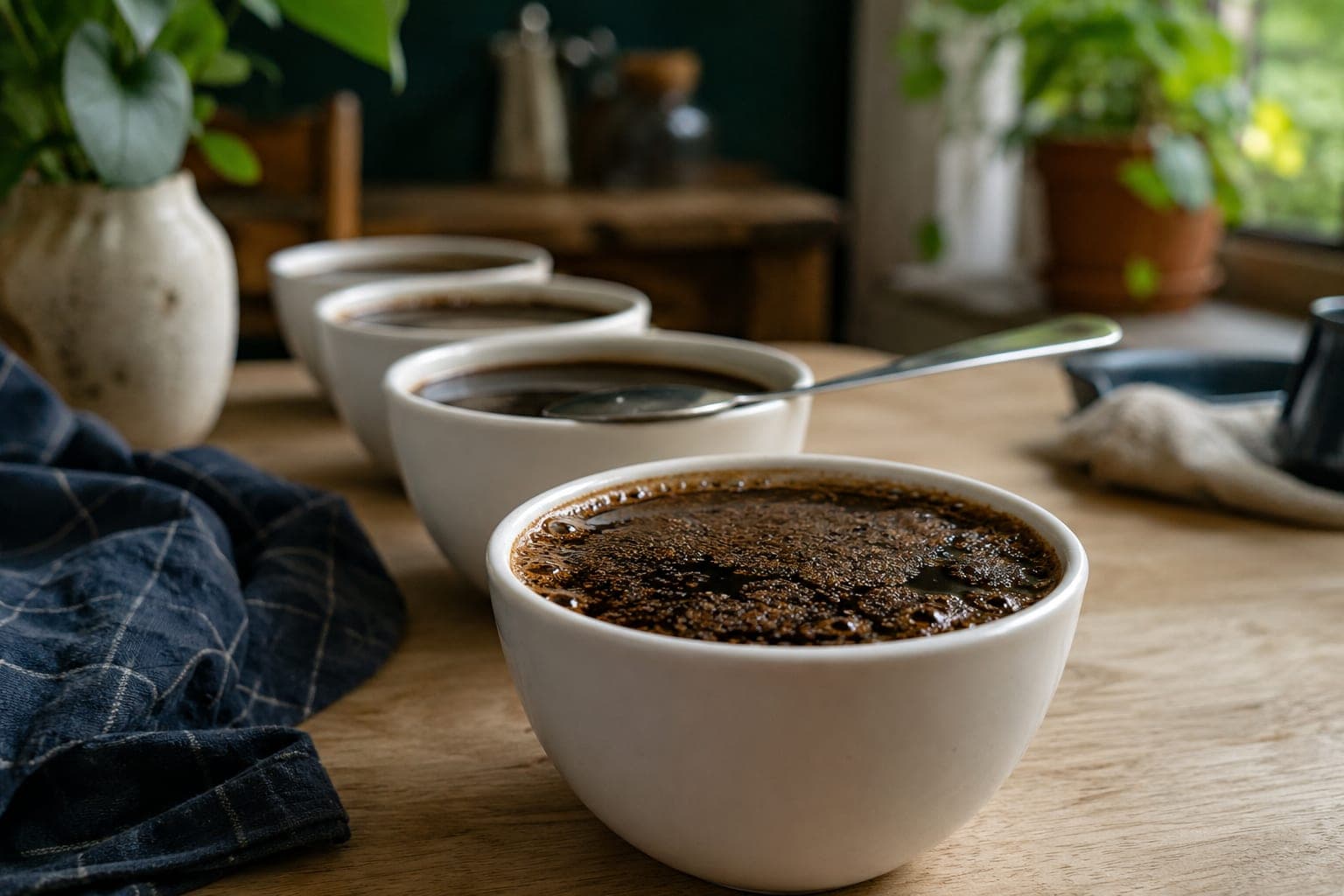
Add the grounds to each cup and pour the hot water right on top. Wait four minutes. A crust of grounds will float to the surface.
Now the fun part: lean in, and with a spoon, gently break the crust — push the grounds aside and bring your nose right down to the cup. That first aroma is the most vivid it will ever be.
Skim off the floating grounds, let the cups cool for a few minutes, then taste. Load a spoonful and slurp it hard — aerosolizing the coffee spreads it across your whole palate at once.
You're not looking for the "right" answer. You're just noticing: which is brighter, which is sweeter, which one you'd reach for tomorrow.
What to notice
Don't reach for fancy words. Start with simple questions: is it sweet or savory? Bright or mellow? Does it remind you of fruit, chocolate, nuts, flowers? Compare across the cups and the language comes on its own.
Do this once a week for a month and you'll taste more in an ordinary morning cup than you used to taste in a year.